Smog Mitigation Technology: Building a Cleaner Future
Exploring air pollution solutions, green technology and Terra Spark's OxyGenix Tree for healthier and more sustainable spaces.
Understanding Smog and Air Pollution
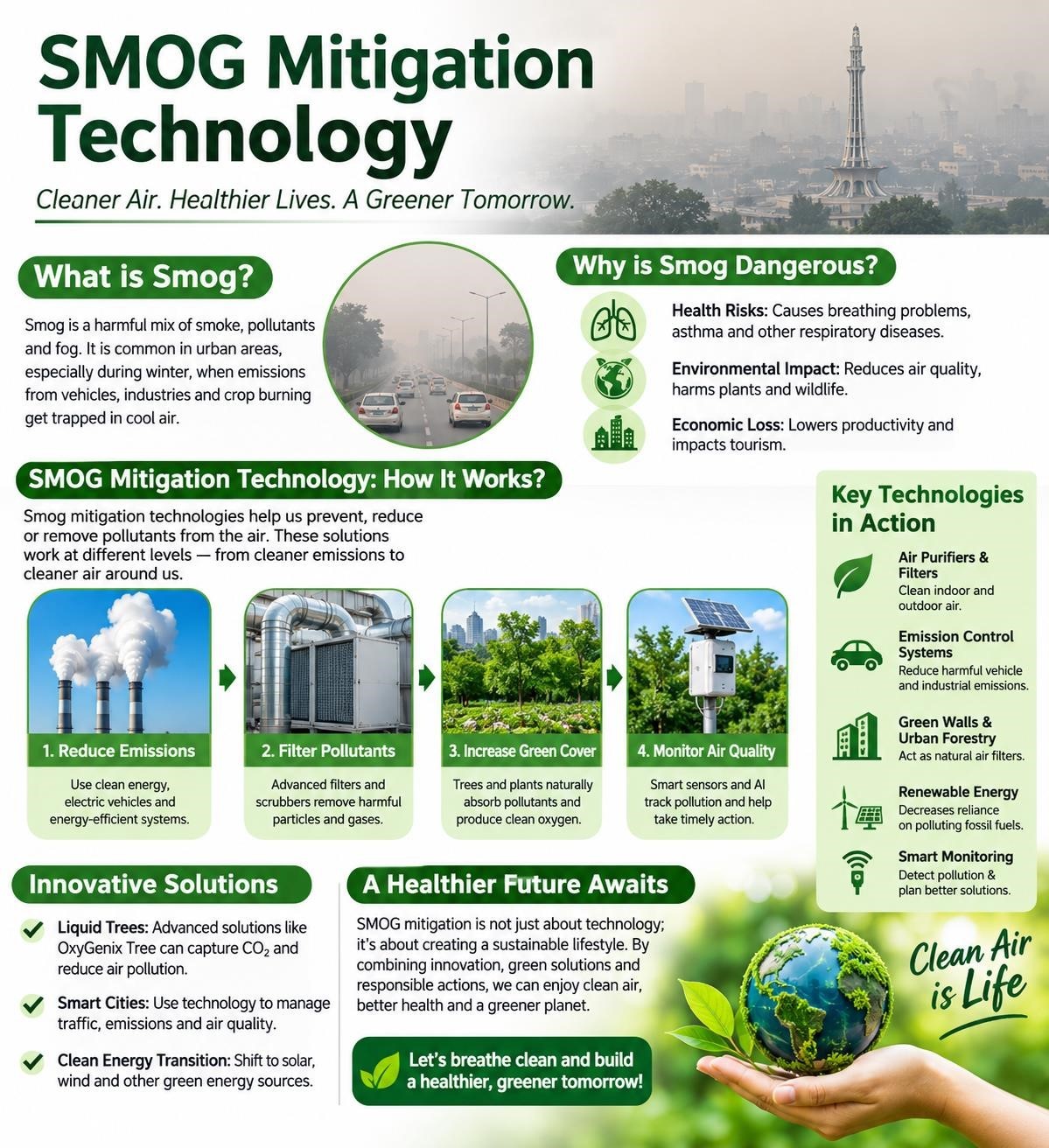
Smog is more than a visibility problem. It is a complex air-quality challenge that affects public health, the environment and urban development. In Pakistan, particularly during winter, polluted air can become a serious concern for communities.
Smog can contain particulate matter and harmful gases produced by sources such as vehicle exhaust, industrial activity, fuel combustion and other human activities. Understanding these pollutants is an important first step towards effective mitigation.
Major Sources of Smog
Industrial Emissions
Industrial processes and fuel combustion can release pollutants into the atmosphere. Emission controls and regular monitoring are important for reducing their impact.
Vehicle Pollution
Transport emissions contribute to urban air pollution. Cleaner transport options and improved vehicle standards can support better air quality.
Energy and Fuel Use
The burning of conventional fuels can release pollutants. Cleaner energy sources and efficient systems can help reduce emissions.
Urban and Agricultural Activities
Construction dust, waste burning and certain agricultural practices can contribute to particulate pollution.
The Smog Mitigation Technology Hierarchy
Effective smog mitigation requires a combination of prevention, pollution control, air-quality improvement and continuous monitoring. No single technology can address every pollutant or source.
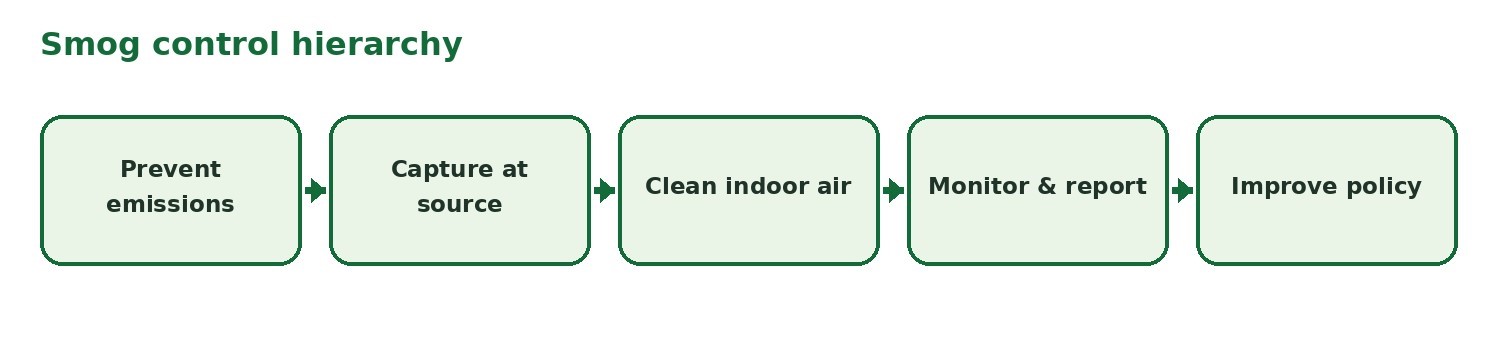
1. Prevent Emissions
Reduce pollution at its source through cleaner energy, efficient processes and better transport practices.
2. Control Pollution
Apply appropriate industrial emission controls, filtration systems and pollution-management measures.
3. Improve Air Quality
Combine green infrastructure, suitable filtration and location-specific environmental technologies.
4. Monitor Results
Use air-quality sensors and data analysis to understand conditions and evaluate the performance of interventions.
How Technology Can Support Cleaner Air
Technology plays an important role in understanding and managing air pollution. Different solutions work in different ways and should be selected according to the pollutants, location and environmental requirements.
Smart Air-Quality Monitoring
Sensors can collect information about air-quality conditions. Monitoring systems and analytics help organisations understand pollution patterns and assess environmental interventions.
Indoor Air Filtration
Appropriate filtration systems can help manage indoor particulate pollution. System selection should consider room size, filter performance and maintenance requirements.
Green Infrastructure
Urban trees, green spaces and nature-based approaches can contribute to more sustainable urban environments.
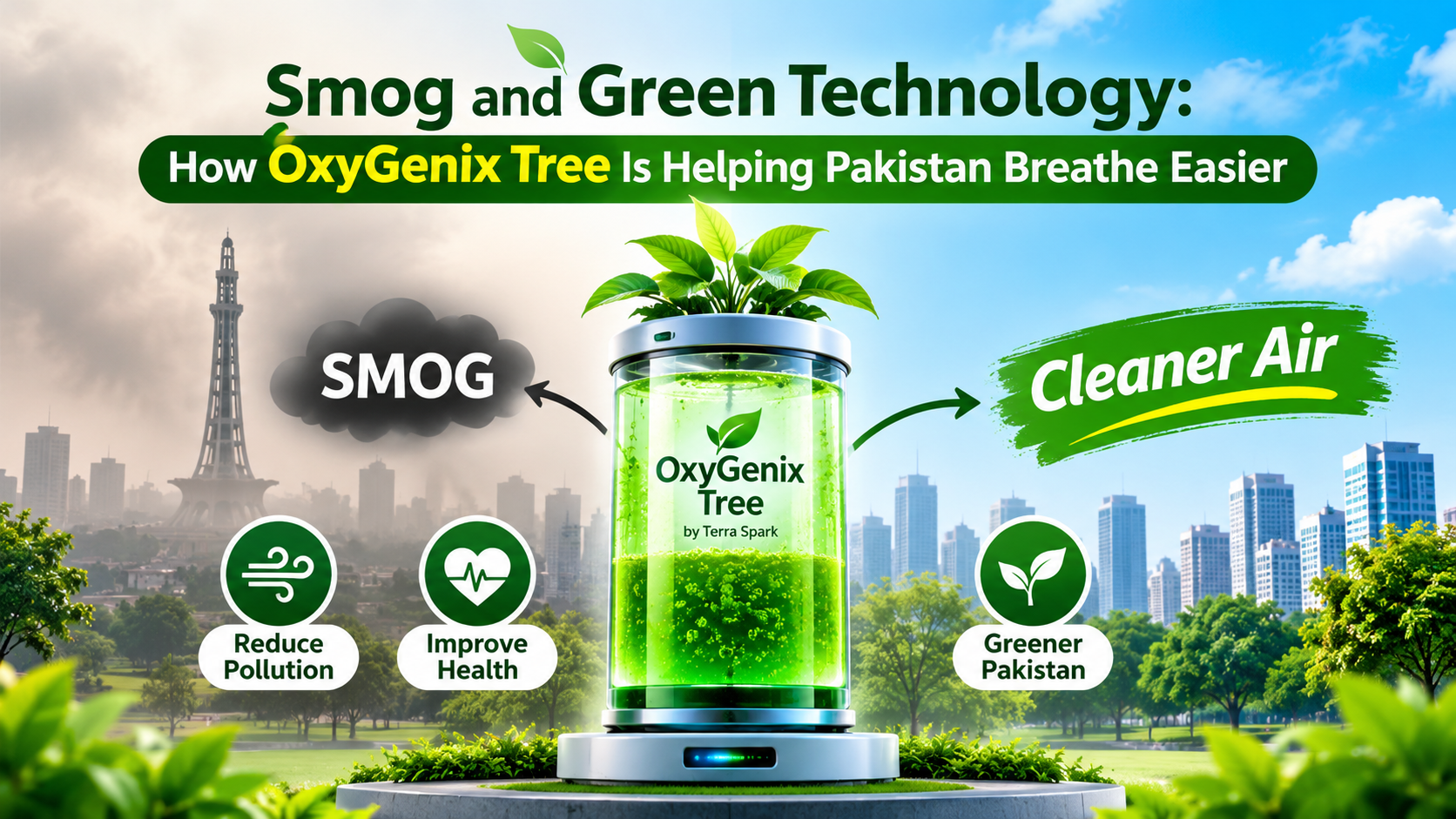
OxyGenix Tree by Terra Spark
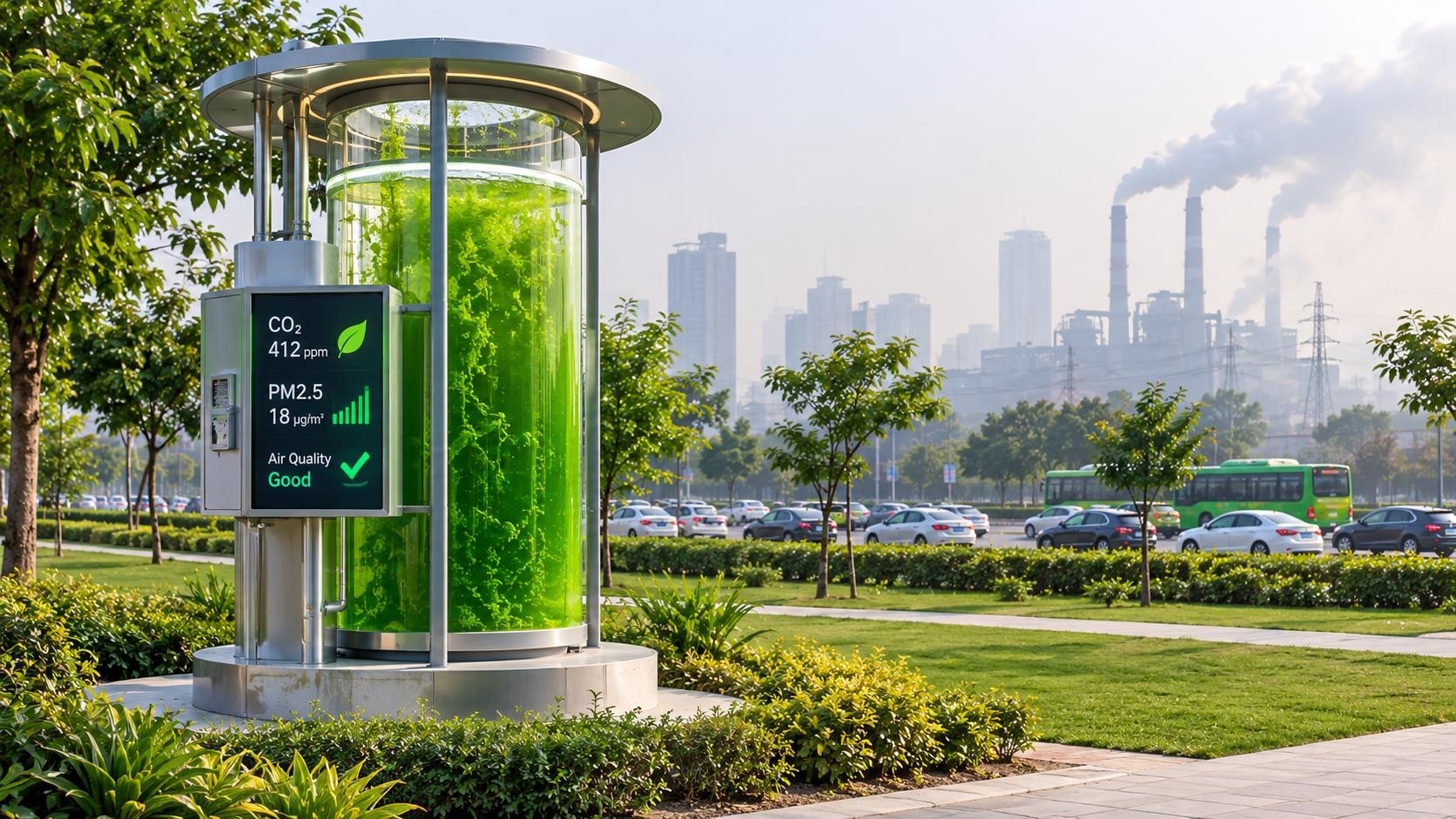
OxyGenix Tree is Terra Spark's microalgae-based environmental technology concept, developed around the idea of using biological systems to support cleaner and more sustainable spaces.
Microalgae-based systems, sometimes described as liquid trees, use algae within a controlled setup. Their potential environmental role should be evaluated through appropriate testing and pollutant-specific measurements.
From Pilot Testing to Practical Deployment
Environmental technologies should be assessed under real operating conditions. Factors such as system capacity, maintenance, environmental conditions and measured performance are important when planning wider deployment.
Why an Integrated Approach Matters
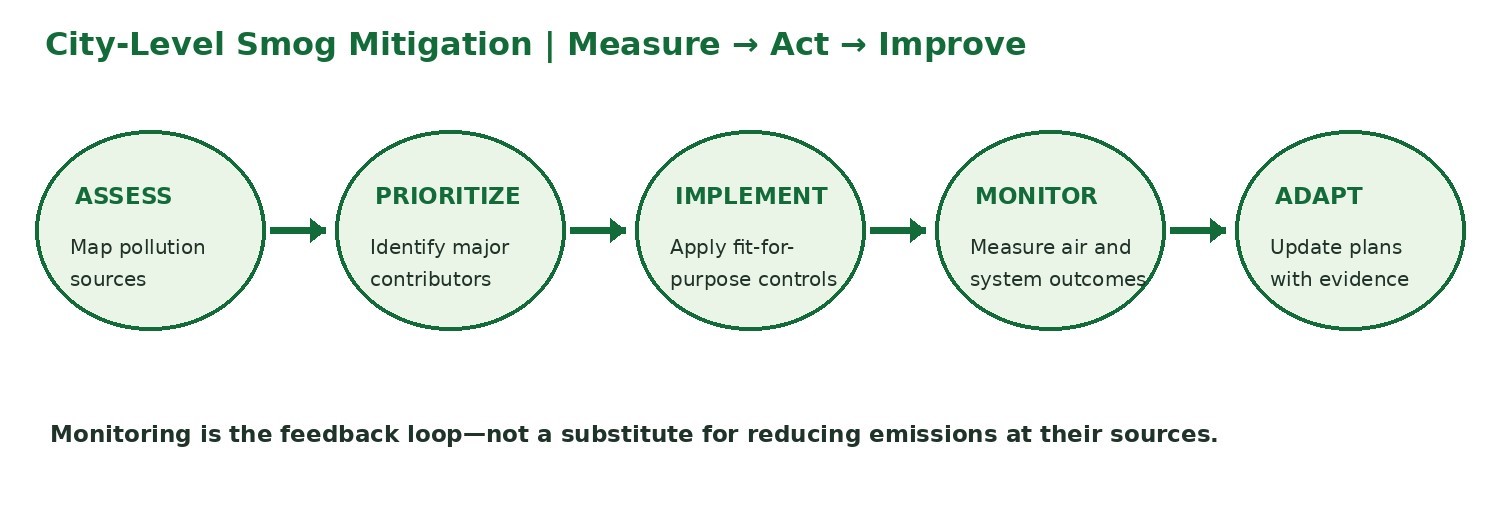
Cleaner air requires coordinated action. Industrial emission controls, cleaner transport, energy improvements, indoor filtration, green infrastructure and air-quality monitoring can work together as part of a wider mitigation strategy.
Cities and organisations should identify their main pollution sources, select suitable interventions and regularly measure the results. This helps ensure that environmental solutions are practical, responsible and evidence-based.
Moving Towards a Sustainable Future
Smog mitigation is a long-term challenge that requires prevention, technology, monitoring and responsible environmental planning. Green technology can contribute to this effort when its performance is properly evaluated and combined with broader pollution-control measures.
Through initiatives such as OxyGenix Tree, Terra Spark aims to contribute to conversations and solutions focused on cleaner air and more sustainable environments.
Let's Work Towards Cleaner Air
Discover Terra Spark's approach to green technology and sustainable environmental solutions.
Contact Terra Spark