A Faisalabad Story of Changing Weather, Crop Residues, and Biomass-to-Energy
A story-led look at how Pakistan’s agricultural leftovers can become a source of useful energy
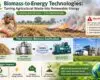
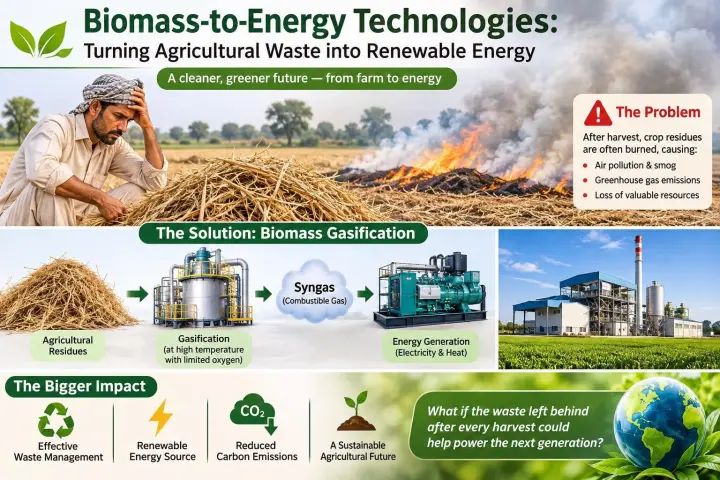
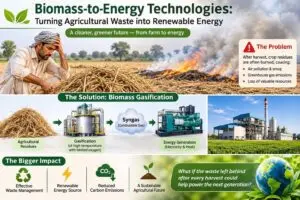 Illustrative overview: crop residues can be collected and converted into useful energy through suitable biomass systems.
The Summer That Arrived Too Early
The first thing Hamza noticed that year was the silence of the canal-side fields.
Usually, the mornings near his village on the outskirts of Faisalabad began with familiar sounds: a tractor starting in the distance, water moving through the fields, birds calling from the trees, and his father checking the wheat before the day grew hot. But that spring, the heat seemed to arrive before the season was ready for it. By late morning, the air above the soil shimmered. The family worried about the crop, the water schedule, and the electricity needed to run the tube-well.
Hamza’s family had farmed in the area for years. They knew that farming had never been easy. There were always risks: the price of seed, the cost of fertiliser, pests, water shortages, and the uncertainty of rain. Yet the seasons had begun to feel less dependable. A spell of intense heat could arrive at a critical stage of crop growth. Rain that was needed could be delayed; when it finally came, it could fall heavily over a short period.
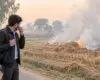
One evening, after returning from the fields, Hamza saw smoke rising beyond the road. A farmer was clearing leftover crop material from a field. The quickest option was to burn it. The smoke drifted across the flat landscape, mixing with dust and the haze already hanging over the region. Hamza wondered why something grown from the soil had to end its journey as smoke.
A Changing Climate Is Changing the Farming Calendar
Faisalabad has a hot semi-arid climate. Its summers are intensely hot, while much of its rainfall arrives during particular seasonal periods rather than being evenly distributed throughout the year. The city’s planning documents describe risks linked to rising temperatures, changing rainfall patterns, extreme weather, drought, and pressure on water resources.
For a farming family, climate change is not an abstract phrase in a report. It can mean more difficult decisions: when to sow, when to irrigate, how to protect a crop during heat stress, and how to manage a season when rainfall does not arrive as expected. Higher temperatures can increase water demand from crops and people. Irregular or intense rainfall can disrupt fieldwork, damage crops, and place additional pressure on drainage and water management.
Faisalabad’s climate challenges also interact with local air pollution. The city’s industrial activity, traffic, dust, waste burning, and other emissions contribute to poor air quality. Burning crop residues can add smoke and particulate pollution during the periods when it occurs. It is important, however, not to blame every smog episode on farms alone: urban and industrial sources also matter.
The Problem Left Behind After Harvest
When a crop is harvested, the work is not always finished. Stalks, straw, husks, cobs, and other plant material remain. Some of this material is valuable and already has a purpose. Wheat straw may be used as animal fodder or bedding. Rice husk can be available at rice mills. Sugarcane bagasse is commonly used by sugar industries. Maize stalks and cobs may have local uses too.
The difficulty begins when residues are left over in quantities that are hard to collect, store, transport, or use. In some circumstances, farmers burn unwanted material because it is fast and clears the field. But burning releases smoke and pollutants into the air, while also wasting material that may contain usable energy.
For Hamza, the smoke was a sign of a wider problem: agricultural communities needed practical ways to handle crop leftovers without creating another burden for the land, the air, or household budgets.
Illustrative scenes only: agricultural residue and a representative biomass gasification facility. These are not photographs of a named Faisalabad installation.
The Turning Point: What If Crop Waste Could Produce Power?
A few weeks later, Hamza heard about biomass-to-energy technology and began looking for organisations in Faisalabad working on waste-to-value solutions. One name he came across was Terra Spark, a Faisalabad-based sustainability company whose published services include waste-to-energy and waste-to-value solutions. The idea sounded simple, but powerful: instead of treating suitable agricultural leftovers as something to discard, they could be assessed as a resource for producing heat, gas, electricity, or other useful outputs.
Biomass is organic material from plants and other biological sources. In Pakistan, possible agricultural feedstocks include wheat straw, rice husk, rice straw, sugarcane bagasse, maize stalks, and corn cobs. The right material depends on what is locally available, what is already being used, and whether enough surplus can be collected economically.
One route is gasification. In a controlled, oxygen-limited environment, prepared biomass is heated and converted into a combustible gas mixture, often called producer gas or syngas. After cooling and cleaning to remove particles and unwanted compounds, the gas can be used in a suitable enginegenerator to produce electricity. Another route is direct combustion, where biomass is burned under controlled conditions to produce heat or steam for power generation. Anaerobic digestion is different: it uses microorganisms to break down wet organic waste and produce biogas.
The technology is not a magic machine. Biomass must be sorted, dried when necessary, stored safely, and supplied consistently. Gasification systems need effective gas cleaning and trained operators.
Emissions must be controlled, and ash or other by-products must be managed responsibly.
Why This Matters in Pakistan and in Central Punjab
Pakistan is an agricultural country, and research has repeatedly examined the energy potential of its crop residues. A 2020 study in the journal Renewable Energy assessed residues from five major crops in Punjab, wheat, sugarcane, rice, maize, and cotton. It estimated around 60 million tonnes of agricultural residue generated annually across the province and assessed a technical electricity potential of about 1,700 MW from four major crop residues. These are research estimates, not existing installed capacity; the amount that can actually be used depends on competing uses, collection costs, moisture, transport, and sustainability.
A separate 2024 site-suitability study identified Faisalabad among the districts with potential for cropresidue-based power development. This does not mean that every field should supply a power plant, or that a large plant is automatically viable. It does mean that local resource mapping and careful feasibility studies can help identify where a project might make sense.
The most sensible starting point may be decentralised: a rice mill using its own rice husk, an agroprocessing facility using a reliable residue stream, or a cluster of nearby farms and businesses supplying a properly designed plant. Local projects can reduce the distance biomass must travel and create work in collection, baling, storage, transport, plant operation, and maintenance.
Terra Spark Walks the Fields
Hamza made a call, and a few days later a small Terra Spark team came out to the village. They did not arrive with promises of a power plant. They arrived with questions, and they walked the fields with Hamza and his neighbours to ask them. Terra Spark is a Faisalabad-based sustainability and energytransformation partner, and its published waste-to-energy services cover feasible technology selection, financial modelling, and involvement in the permitting process. In practice, that meant starting from ground reality: what was left after harvest, who already used it, and what could honestly be called surplus.
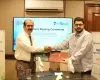
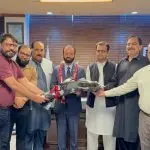
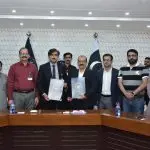
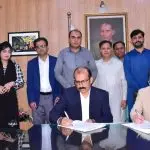
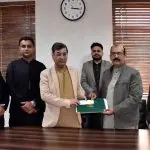
Terra Spark has also built local research and institutional ties around this work. On 16 October 2025, it announced a Memorandum of Understanding with the University of Agriculture Faisalabad (UAF), with a special focus on research, development, and implementation of sustainable solutions, including wasteto-energy initiatives. On 22 October 2025, the company reported a strategic visit to the Punjab Bioenergy Institute at UAF to explore the potential of agricultural and other organic wastes. For a farmer like Hamza, ties like these mean the questions raised in the field can be looked at alongside local agricultural research.
Over the following weeks, the team’s work followed a clear path. First came a waste-stream assessment: which residues were genuinely surplus, when they were available during the season, and what other uses already existed for them. Then came the practical details of moisture, collection distance, and storage. Only after that did the conversation turn to technology options and financial feasibility, along with the environmental requirements and permits any project would need. If the numbers supported it, the next stages would be planning the conversion system, coordinating implementation, and setting up monitoring and reporting. The technology and scale would depend on the actual feedstock, because not every residue suits every process.
Hamza noticed what was different about this approach. Nobody promised a quick fix. The first question was not what could be built, but what the land could spare.
How a Biomass-to-Energy Project Could Work
- Identify the residue — Map which crops and processing industries generate residues nearby, and measure how much is genuinely surplus after existing uses are protected.
- Collect and prepare it — Collect, sort, size-reduce, and dry the feedstock where needed. Store it under cover to protect it from rain and moisture.
- Convert it into energy — Use an appropriate technology—such as gasification, controlled combustion, or anaerobic digestion—based on the type and moisture content of the material.
- Clean and control emissions — Install suitable filters, gas-cleaning equipment, monitoring, and safe operating procedures. Biomass energy must meet environmental standards.
- Use the energy locally — Supply electricity or heat to nearby agro-industries, mills, workshops, cold storage, or a suitable local distribution system.
The Benefits and the Responsibilities
- Less open-field burning: Using genuinely surplus residues in a controlled system may reduce the amount burned in fields, although this depends on local collection and farmer participation.
- A local renewable energy resource: Agricultural residues can diversify energy supplies and support useful heat or electricity near farms and processing facilities.
- Rural employment: Collection, storage, transport, equipment operation, and maintenance can create local jobs and new income opportunities.
- Better resource use: A by-product can become an input for energy, supporting a more circular relationship between agriculture and industry.
There are important limits. Not all crop residue is waste. Removing too much straw or stalk material can deprive soil of organic matter, reduce ground cover, and affect moisture retention. Some residues are needed for livestock feed, household fuel, or existing industries. A responsible project must use only a sustainable surplus, avoid long-distance transport where possible, control emissions, and prove that its full environmental benefits exceed its costs.
A Different Ending for the Smoke
In the story, Hamza returns to the field after the harvest. The dry stalks are no longer viewed as a problem to be cleared as quickly as possible. With the Terra Spark assessment in hand, he and other farmers begin asking a different set of questions: Which material can be collected without harming the soil? Is there a nearby mill or industry that can use it? Could a local biomass project offer a fair price? Who will operate the equipment, test the emissions, and maintain the plant?
The answers would not arrive in a single season. A project would need a feasibility study, reliable feedstock agreements, financing, trained staff, environmental approvals, and a dependable buyer for its electricity or heat. That is exactly the ground Terra Spark’s team had walked with Hamza: assessing the residue, weighing the technology, modelling the costs, and mapping the permits. But the conversation itself marks a change from burning a resource because there seems to be no alternative, to planning how it might be used.
Faisalabad cannot solve climate change through one technology. Biomass-to-energy will not stop heatwaves, restore rainfall patterns, or replace the need for water conservation, cleaner transport, industrial emission controls, resilient crops, and urban green spaces. Yet, when designed carefully, it can address one practical part of the challenge: turning suitable agricultural residues into useful energy while reducing avoidable open burning.
As the evening breeze moves across the fields, Hamza looks at the land differently. The harvest has left something behind, and for the first time there is a plan to find out what it is worth. Perhaps, with the right planning, the right partners, and the right technology, that remainder can help power the next season.
THE CENTRAL IDEA
A crop residue should not automatically be burned or treated as waste. Where a sustainable surplus exists, it may become a locally useful source of heat or electricity provided the project protects soil, controls emissions, and works for farmers.
Editorial note: Hamza and his village are fictional and composite, created to explain real challenges faced by farming communities in central Punjab; they are not a documented individual or community. Terra Spark’s role in the story is illustrative, and no commercial crop-residue power plant is claimed to be operating in Faisalabad. Terra Spark’s services, its MoU with UAF, and its visit to the Punjab Bioenergy Institute are documented in the sources above. Images are illustrative and are not photographs of a named installation. Climate descriptions and biomass potential figures are drawn from the cited planning documents and research; research estimates are not claims of currently installed generation capacity.