Science • Urban Sustainability • Smart Environmental Systems
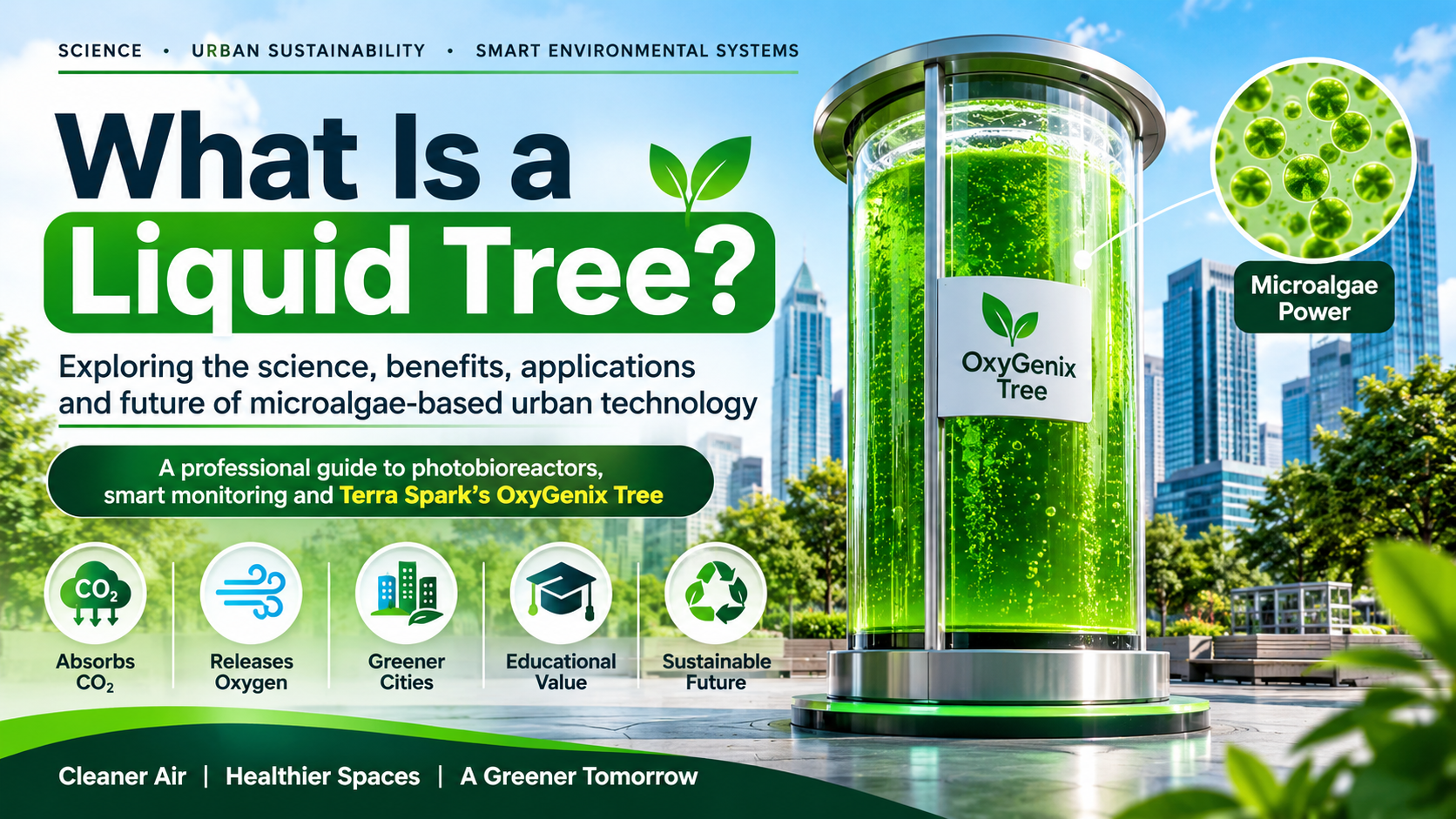
What Is a Liquid Tree?
Exploring the science, benefits, applications and future of microalgae-based urban technology
A professional guide to photobioreactors, smart monitoring and Terra Spark’s OxyGenix Tree.
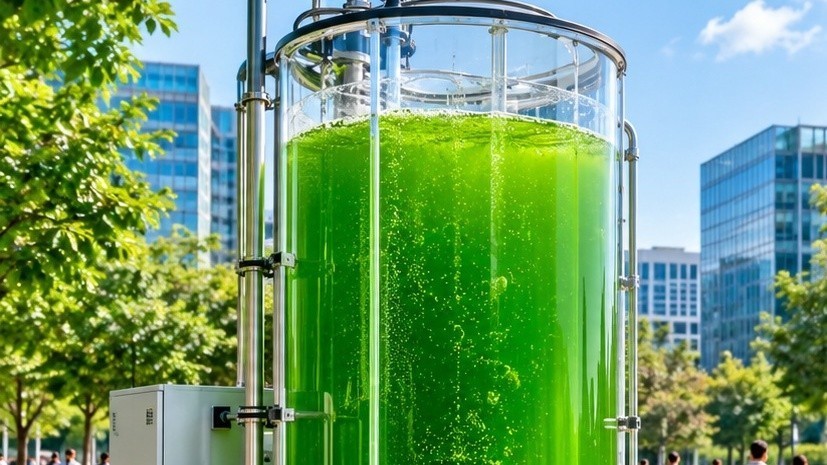
Conceptual illustration of a microalgae photobioreactor in an urban plaza. AI-generated; not a photograph of any specific installation.
Key Takeaways
- A Liquid Tree is a compact, microalgae-based photobioreactor (PBR): algae, water, nutrients and light inside a controlled vessel.
- Through photosynthesis, the algae take up CO₂, build biomass and release oxygen.
- It complements natural trees and clean-energy action; it does not replace them.
- CO₂ uptake is not the same as removing PM₂.₅, NOx or ozone. Ask for measured, independently verifiable data.
Introduction: Bringing Nature-Inspired Technology into Cities
Cities are facing a combination of environmental pressures: traffic emissions, industrial activity, dense construction and limited space for green infrastructure. Conventional trees remain essential to healthy urban ecosystems, but some built environments, such as paved plazas, transport facilities and compact courtyards, offer little room for planting.
A Liquid Tree is one approach being explored for these constrained settings. The term commonly describes a compact photobioreactor that cultivates microscopic photosynthetic organisms, especially microalgae, in a controlled water-based system. With access to light, nutrients and carbon dioxide, the algae photosynthesise, producing biomass and releasing oxygen.
This technology connects biology with engineering and, in some installations, sensors and digital monitoring. It is not a substitute for forests, mature trees, emission reduction or public-health-grade air-cleaning systems. Its value depends on the design, operating conditions and independently measured performance.
1. What Is a Liquid Tree?
A Liquid Tree is a public-facing name for a microalgae-based photobioreactor (PBR). A typical system contains a transparent vessel or panel, water, nutrients and a selected microalgae culture. Light supports photosynthesis, while circulation and gas-transfer components may help maintain suitable conditions.
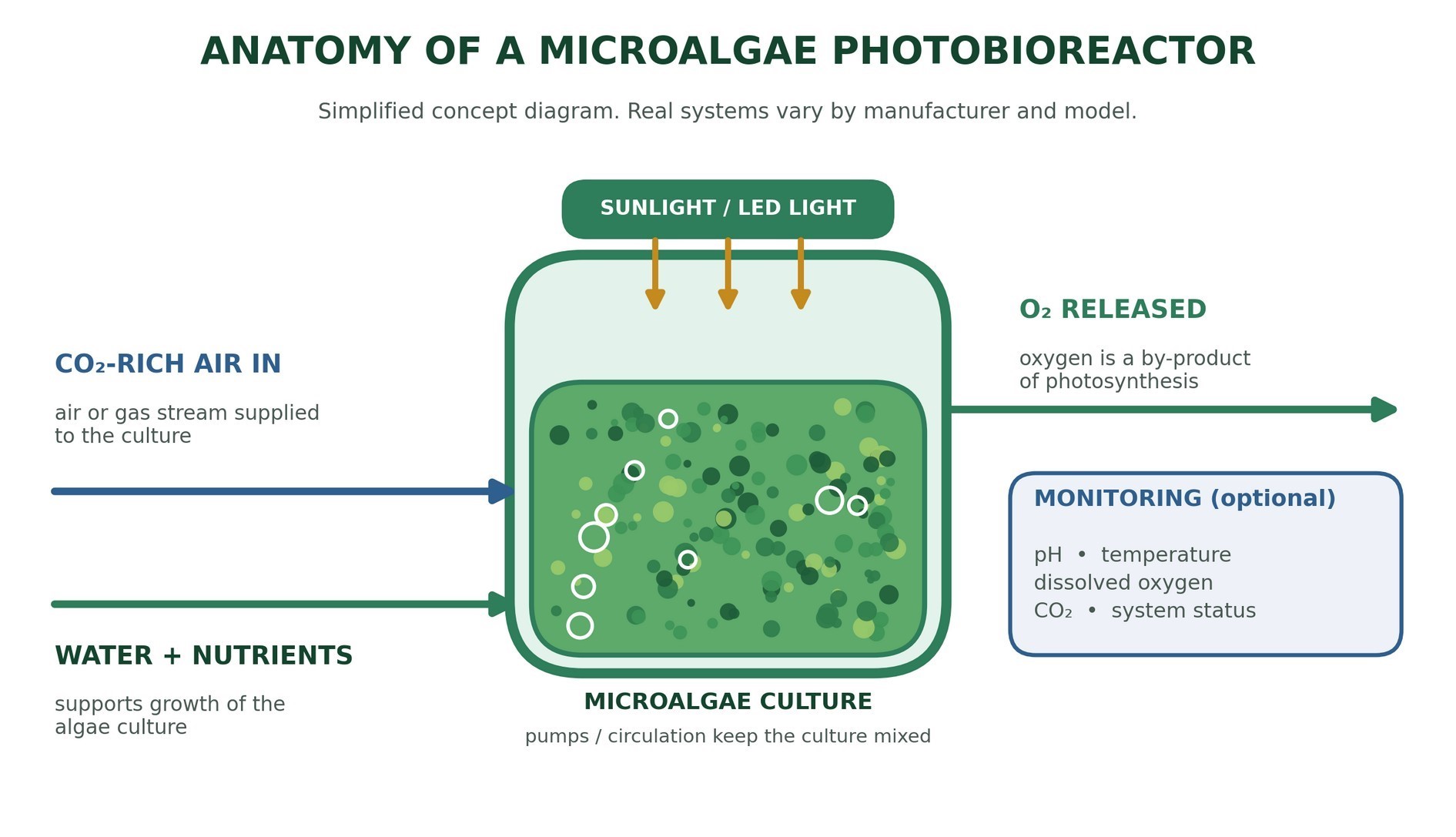
Figure 1. Simplified anatomy of a microalgae photobioreactor.
The best-known urban example is LIQUID3 in Belgrade, Serbia. Its developers describe it as an urban photobioreactor intended for locations with limited space and high pollution pressure. LIQUID3 is a specific design; other systems marketed as Liquid Trees may use different equipment, algae strains and monitoring methods. Explore the official LIQUID3 project website for its own design and project description.
2. The Science Behind the Technology
Microalgae are photosynthetic microorganisms. Like land plants, they use light energy to convert carbon dioxide and water into organic matter, releasing oxygen as a by-product.
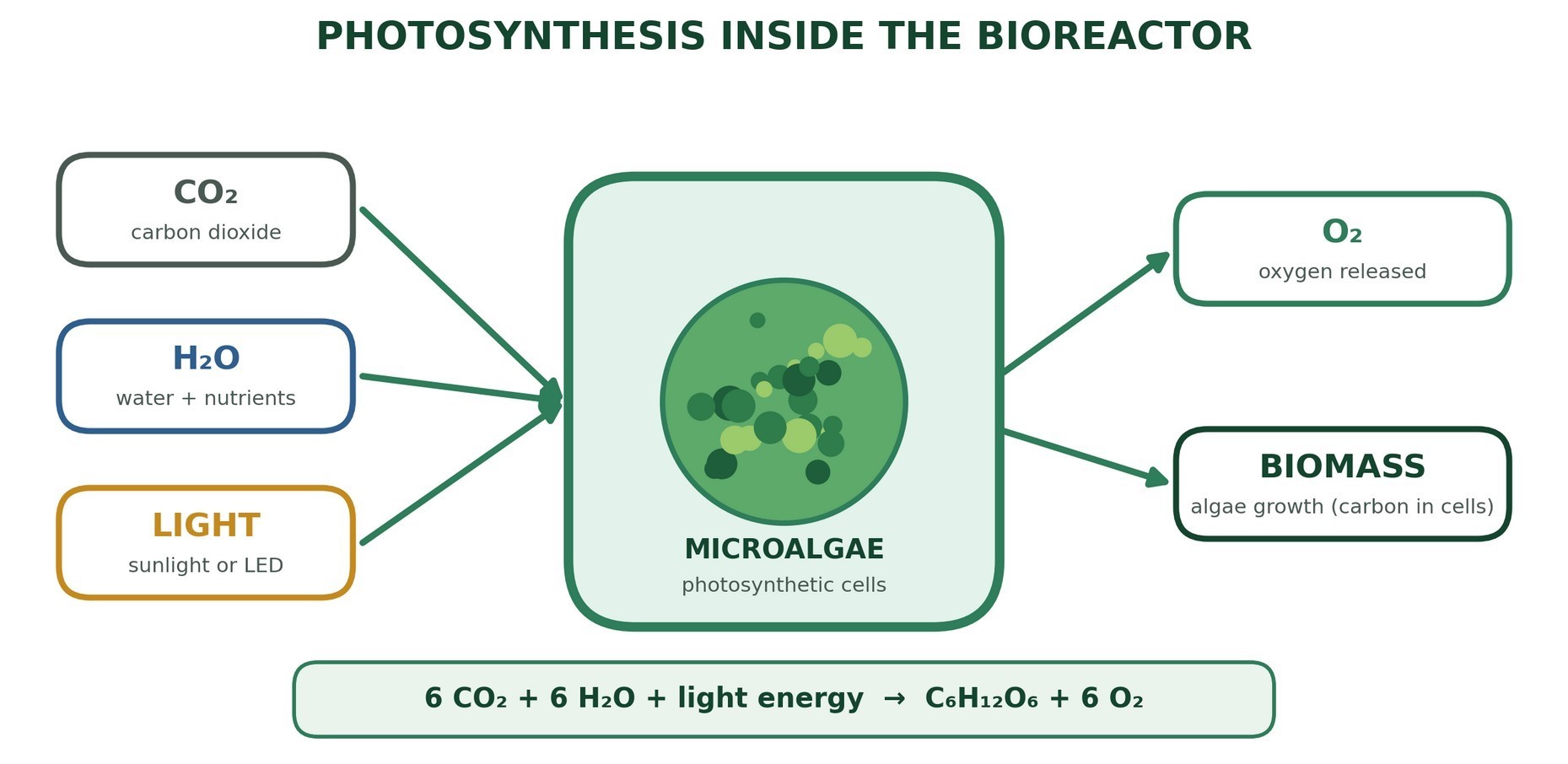
Figure 2. Inputs and outputs of photosynthesis in the culture.
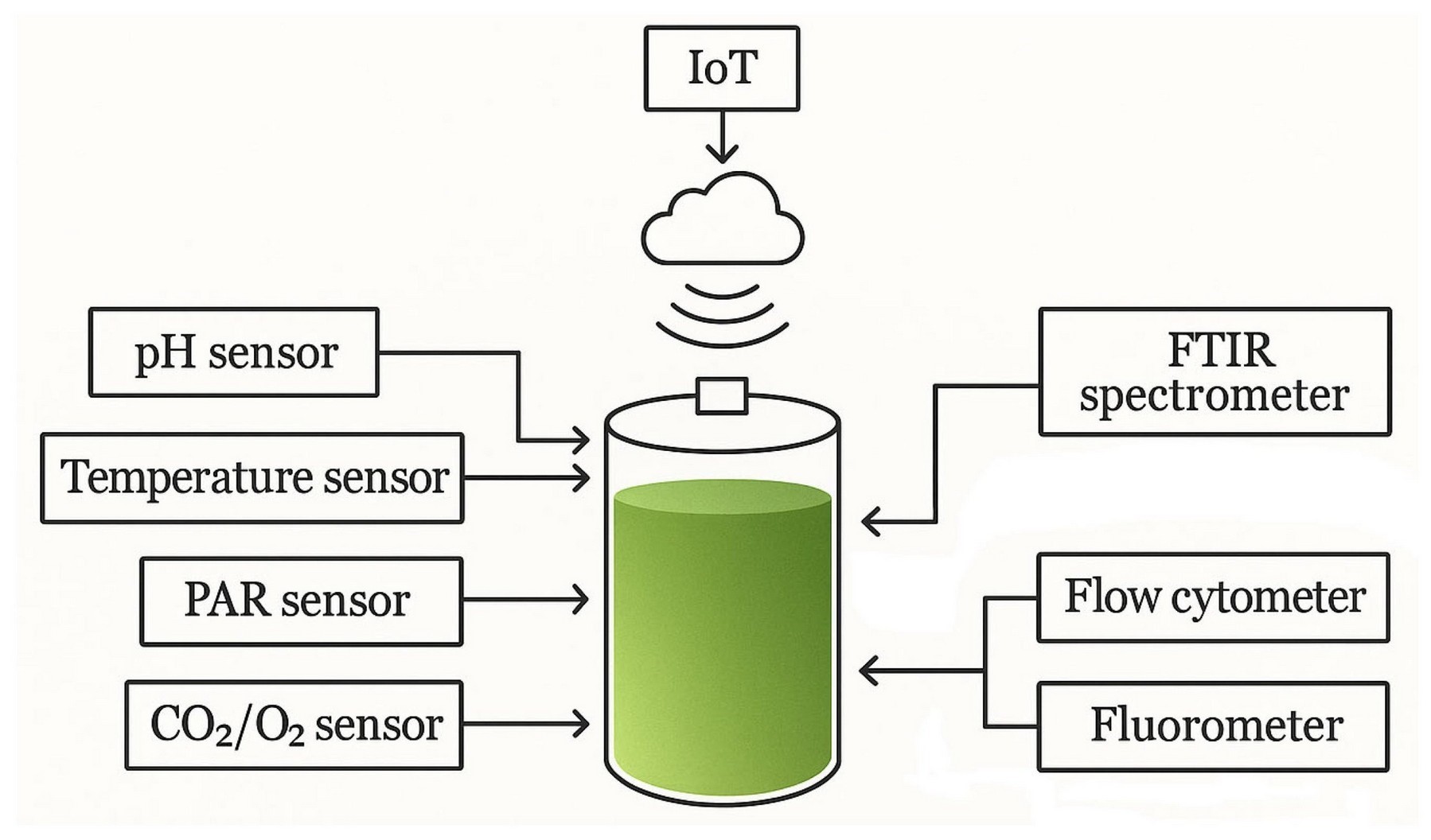
Figure 3. Example sensor and monitoring schematic for a photobioreactor.
Why operating conditions matter
The rate of photosynthesis is not constant. It depends on the algae species, light intensity and distribution, temperature, pH, nutrient availability, carbon dioxide transfer and the density of the culture.
Photobioreactor design must deliver light and carbon to the culture while managing temperature, mixing and dissolved oxygen.
Scientific reviews describe microalgae as promising for carbon capture and biomass production, but also identify practical barriers such as mass transfer, light availability, energy demand, operating cost and scale-up. A small urban unit should therefore not be assigned a fixed carbon-capture figure unless that figure is supported by measured data for the specific unit.
Further reading: Photobioreactor design and CO₂ transfer (2019 review) and The role of microalgae in circular carbon capture systems (2025 review).
3. How Does a Liquid Tree Work?
The exact process varies by product, but a smart microalgae-based installation can be explained through four broad stages. These stages describe a general system architecture rather than a guarantee that every commercial unit contains identical components.
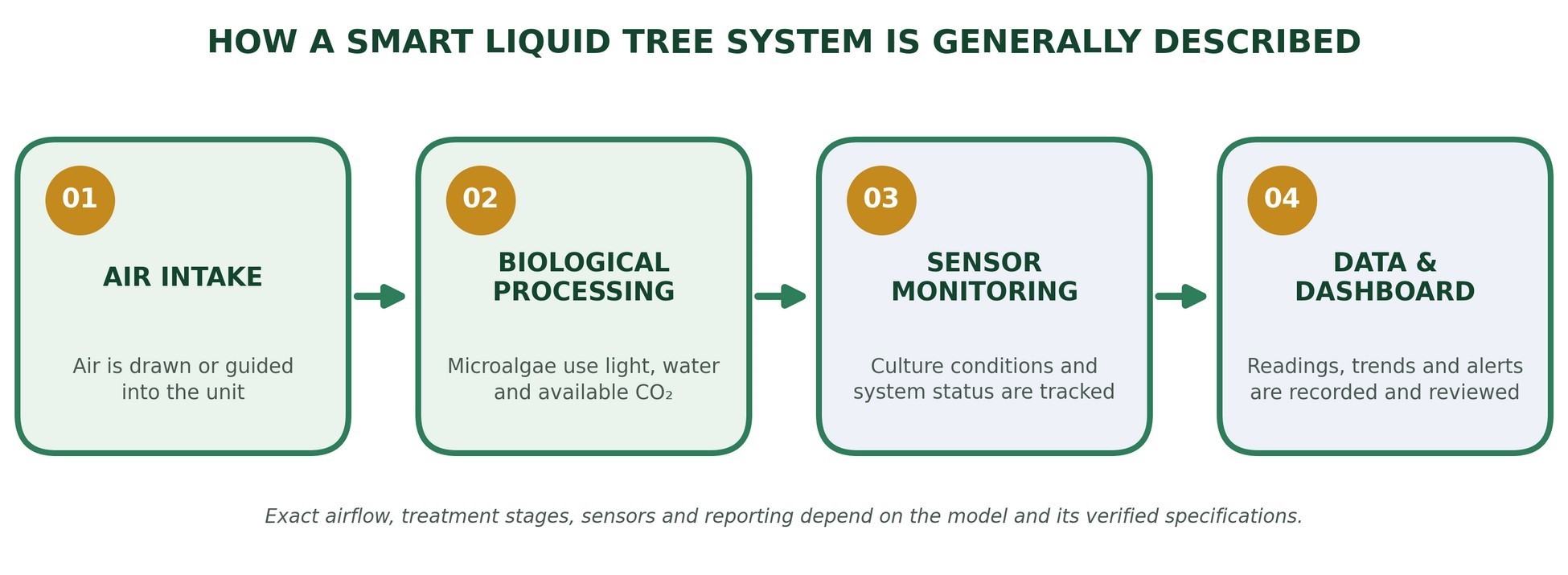
Figure 4. The four general stages of a smart microalgae-based system.
Stage 1: Air intake and circulation
Air is drawn or guided into the unit. The airflow route and gas-contact method depend on the engineering design.
Stage 2: Biological processing
Carbon dioxide becomes available to the microalgae culture. With suitable light and nutrients, the algae use photosynthesis and produce biomass and oxygen.
Stage 3: Sensor-based monitoring
Sensors may track parameters such as temperature, pH, dissolved oxygen, carbon dioxide and selected air-quality indicators. Sensor type, placement and calibration determine what can reliably be reported.
Stage 4: Data and dashboard
A connected dashboard can display readings, trends, alerts and operating status. Data should be timestamped and interpreted with clear units and calibration information.
4. Liquid Trees vs. Conventional Trees
Both approaches can contribute to environmental sustainability, but they do different jobs. A compact bioreactor cannot reproduce the full ecological value of a living tree or a forest.
| Aspect | Conventional trees | Liquid Tree / PBR |
|---|---|---|
| Living structure | Rooted plant with trunk, branches and leaves | Engineered vessel containing a microalgae culture |
| Space needs | Needs suitable soil, rooting volume and growing space | Can fit selected compact sites; footprint varies by model |
| Environmental role | Shade, habitat, cooling, soil support, carbon storage and more | Controlled biological process; may support CO₂ uptake and oxygen release |
| Time horizon | Grows and develops over years | Can be installed as equipment, but needs commissioning and ongoing operation |
| Monitoring | Can be assessed through field surveys and ecological monitoring | May include built-in sensors and a digital dashboard |
| Limitations | Needs land, water and long-term care | Needs energy, maintenance, nutrients, monitoring and verified performance |
Protect and expand natural green spaces while testing compact biological systems where planting is impractical.
5. Potential Environmental Benefits
Carbon uptake through photosynthesis
Microalgae incorporate carbon from CO₂ into biomass. The amount retained depends on species, operating conditions and what happens to the harvested biomass. Carbon capture should be quantified through a transparent measurement method.
Oxygen as a photosynthetic by-product
Oxygen is released during photosynthesis. The amount and its practical effect on surrounding air depend on system scale, light, operation and the surrounding environment.
Compact use of built-up space
A modular installation may be considered for courtyards, plazas, campuses and other locations where soil-based planting is difficult.
Education and public engagement
A visible bioreactor can help students and visitors learn about photosynthesis, biotechnology, sensors and environmental data.
Biomass recovery opportunities
Harvested algae may have potential uses, but any reuse as fertilizer, feedstock or another product requires appropriate quality, safety and regulatory checks.
6. Where Can Liquid Tree Technology Be Considered?
Potential sites should be selected after a technical assessment of available space, sunlight, ventilation, power, water, safety, maintenance access and the purpose of the installation. The following are possible use cases, not a claim that every site is automatically suitable.
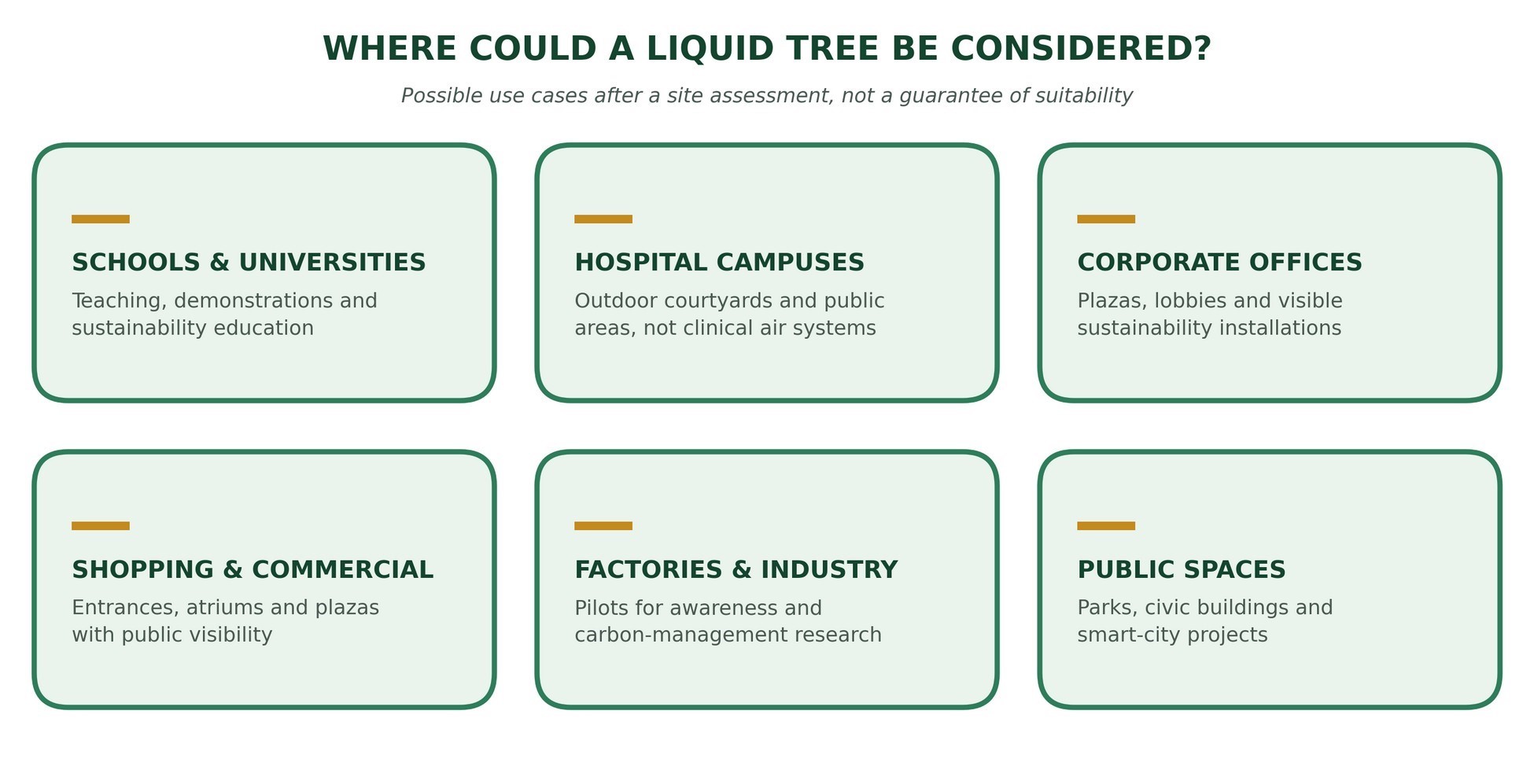
Figure 5. Possible use cases, subject to site assessment.
Schools and universities
Outdoor courtyards, science laboratories or campus sustainability zones can use a unit as a teaching and research demonstration. It can support lessons on photosynthesis, microalgae, sensors and environmental monitoring.
Hospitals and healthcare campuses
A system may be considered for suitable outdoor courtyards or public-facing sustainability areas. It should not be presented as a replacement for hospital ventilation, infection-control systems, HEPA filtration or clinical air-quality requirements.
Corporate offices
Reception areas, courtyards and landscaped plazas can provide visible sustainability installations, subject to indoor air, electrical and maintenance requirements.
Shopping malls and commercial centres
Atriums, entrances and outdoor plazas may offer public visibility and educational value. Structural safety, access, crowd movement and servicing need to be assessed.
Factories and industrial facilities
A pilot may support environmental awareness or research into biological carbon management. It does not replace stack-emission controls, pollution-prevention measures or regulatory compliance.
Public buildings and smart-city projects
Civic facilities, parks, exhibitions and transport-adjacent spaces may be considered where site conditions and maintenance arrangements are appropriate.
7. The Role of Sensors, IoT and Artificial Intelligence
Digital monitoring can make a biological installation easier to operate and evaluate. Depending on the actual hardware, a system may record:
- Temperature and pH of the culture.
- Dissolved oxygen and other indicators of biological activity.
- CO₂ concentration at defined sampling points.
- Selected ambient air-quality indicators, such as particulate matter, where suitable calibrated sensors are installed.
- Pump, lighting, circulation and system-health status.
Figure 6. Schematic of sensors that can be connected to a photobioreactor, with IoT data transfer. Research-grade instruments shown, such as FTIR, flow cytometer and fluorometer, are typical of laboratory setups; a commercial urban unit usually uses a smaller sensor set.
Analytics or AI may help identify unusual readings, compare trends and flag maintenance needs. However, an AI-generated dashboard does not automatically make measurements accurate. Reliable reporting requires calibrated sensors, documented sampling locations, suitable baselines, maintenance records and clear explanations of what each metric measures.
8. OxyGenix Tree: Terra Spark’s Liquid Tree Innovation in Pakistan
Terra Spark presents OxyGenix Tree as a smart clean-air and carbon-capture product for urban spaces, campuses, commercial buildings and institutions. Its product information describes an approach combining air intake, biological treatment, sensors and dashboard-based reporting. The exact technical configuration and performance should be confirmed against the model specification and site-specific test data.
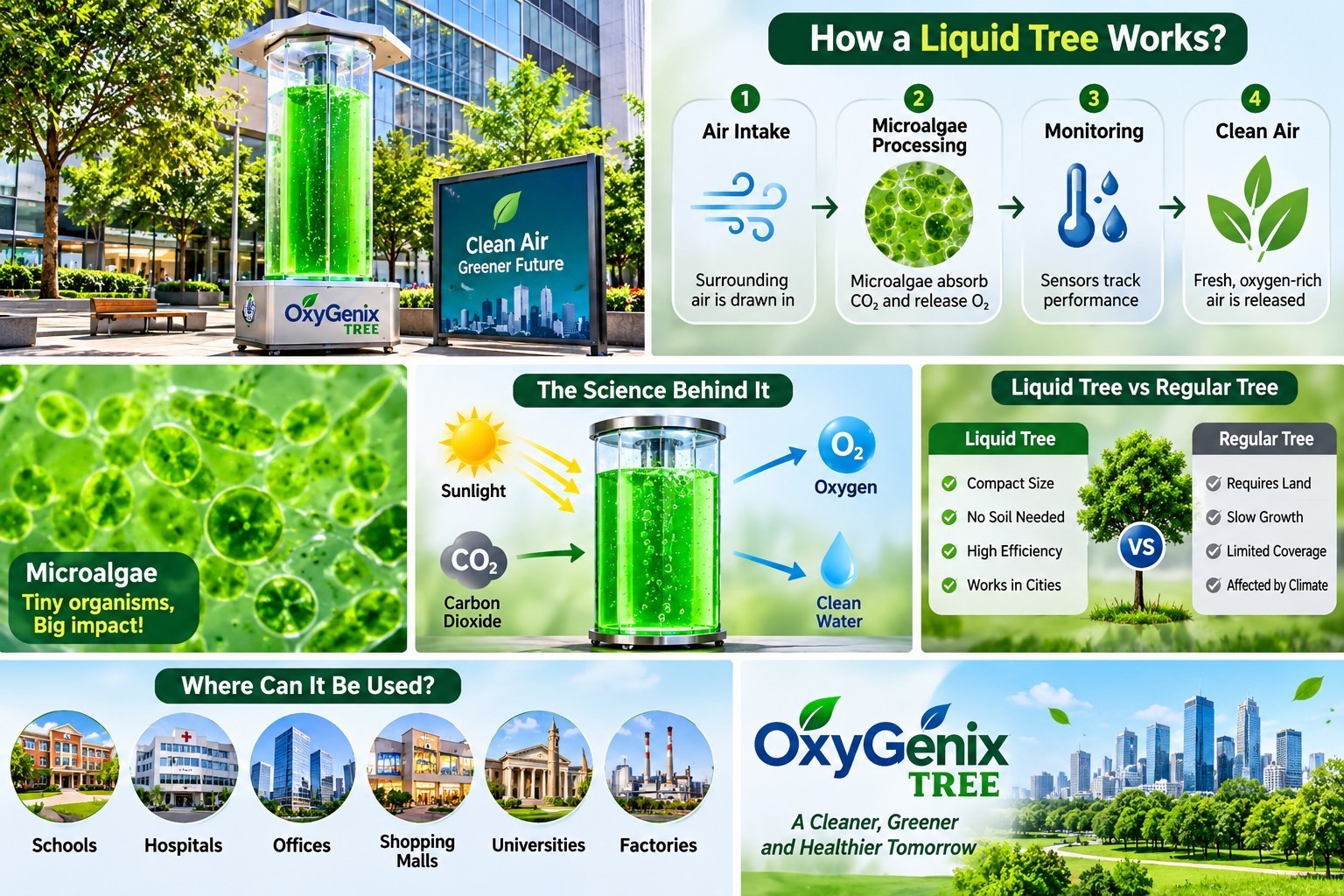
Figure 7. OxyGenix Tree visual overview (conceptual, AI-generated illustration). Statements such as “High Efficiency”, “Clean Water” and the tree comparison are promotional and should be confirmed against measured product data.
Terra Spark also describes a broader Liquid Tree initiative in Punjab, including a pilot in Faisalabad and a planned move to Lahore. These are company-published project updates; readers should consult the linked announcement for the company’s account and distinguish project announcements from independently audited performance data.
Project update: Punjab Expands Pakistan’s First Liquid Tree Project.
An important academic milestone is documented by Government College University Faisalabad (GCUF): the university reported a Technology Transfer Agreement with Terra Spark for algae-based carbon-capture technology, developed through its BioEco Tech Research Cluster.
Institutional source: GCUF: Technology Transfer Agreement for Algae-Based Carbon Capture.
Separately, the University of Agriculture Faisalabad (UAF) reported an MoU with Terra Spark in October 2025 covering research, sustainable process optimisation, waste-to-energy projects and startup collaboration. The UAF announcement does not describe this as a specific OxyGenix Tree deployment, so the partnership should not be presented as proof of a Liquid Tree installation.
Institutional source: UAF: MoU with Terra Spark.
9. Challenges and Limitations
Energy use
Pumps, sensors, circulation and artificial lighting may consume electricity. A sustainability assessment should include the energy source and total operating demand.
Maintenance
The culture, vessel, pumps, sensors and tubing require planned inspection and cleaning. Maintenance frequency depends on the design and operating environment; avoid assuming a universal one- or two-month service interval.
Biological stability
Temperature, pH, contamination, nutrient levels and light can affect algae growth. Local strains and operating conditions need testing.
Measurement and verification
Claims about CO₂ capture, oxygen output or pollutant removal should be supported by calibrated instruments, defined measurement boundaries and repeatable methods.
Scale and economics
A small demonstration unit cannot be assumed to deliver the same results as a large industrial photobioreactor. Capital cost, operating cost, lifetime and disposal or reuse of biomass all matter.
Air-quality claims
CO₂ uptake is not the same as removal of PM₂.₅, PM₁₀, NOx, ozone or other pollutants. Each pollutant requires its own suitable measurement and treatment pathway.
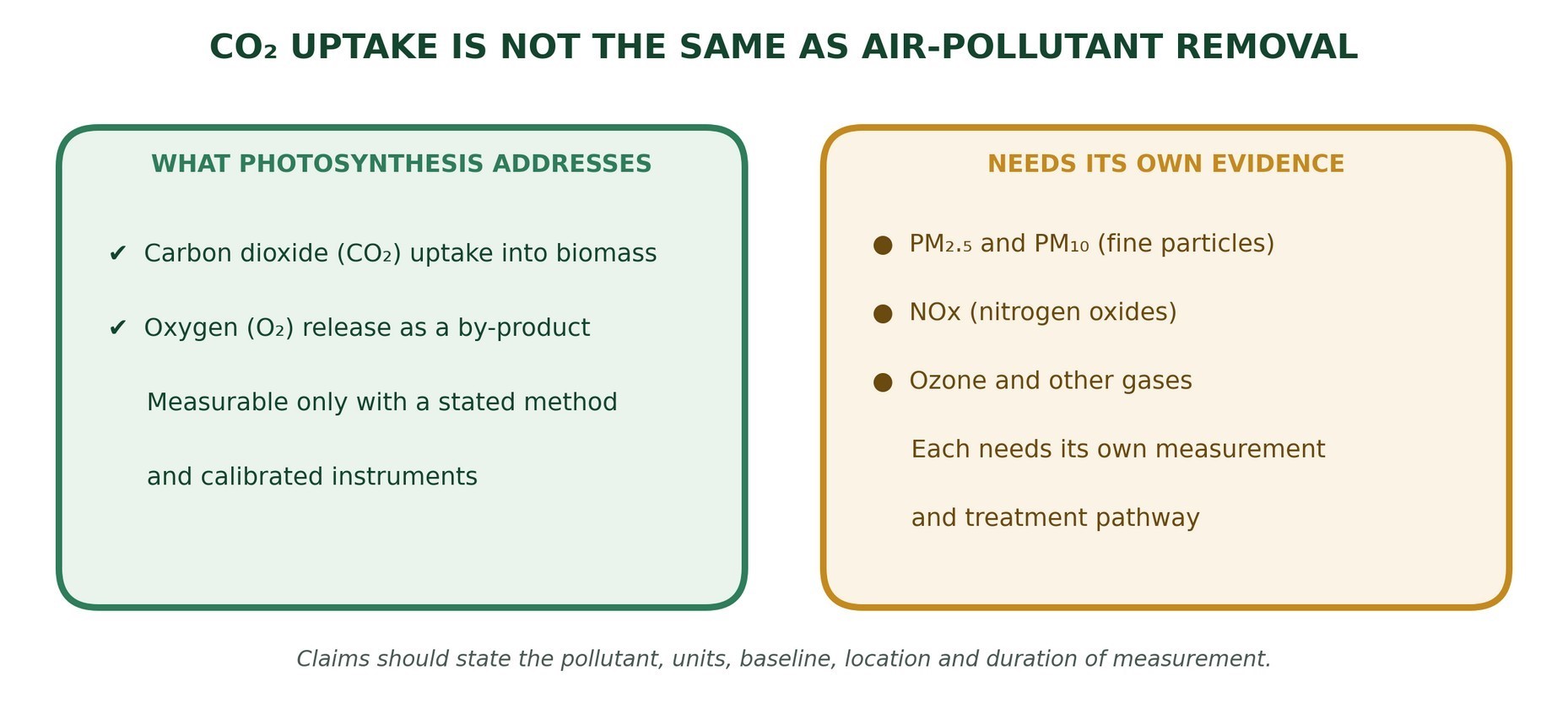
Figure 8. Why CO₂ uptake and air-pollutant removal must be evidenced separately.
10. What Should a School, Hospital, Office or Factory Check Before Installation?
- Define the objective: education, demonstration, research, carbon-management pilot or a specific air-quality intervention.
- Request the technical datasheet: dimensions, power consumption, water and nutrient needs, airflow, algae species and safety information.
- Ask what is measured: which pollutants and biological parameters, where sensors are located, and whether calibration records are available.
- Request baseline and post-installation data: measurements with units, dates, sampling duration and a clear comparison method.
- Confirm operations: who will operate, clean and maintain the unit, and how downtime or sensor faults will be reported.
- Check safety: electrical safety, water containment, access, ventilation, cleaning chemicals and site-specific health and safety requirements.
- Agree on transparent reporting: measured outcomes, limitations, energy use and maintenance costs.
11. The Future of Liquid Trees in Sustainable Cities
Future development may focus on more efficient light and gas transfer, better local microalgae selection, lower-energy circulation, improved sensor calibration, automated maintenance alerts and responsible biomass recovery. Integration with smart-city dashboards may help institutions compare installations, provided data standards and verification methods are consistent.
The most useful future systems will not rely on attractive claims alone. They will publish clear performance indicators, explain measurement methods and show how their environmental benefits compare with the energy and resources required to operate them.
Conclusion: A Complementary Tool for Greener Urban Spaces
A Liquid Tree brings the science of microalgae photosynthesis into a compact engineered system. It offers an interesting option for selected urban locations where traditional planting is difficult and can create opportunities for environmental education, research and monitored sustainability projects.
However, it is not a replacement for natural trees, clean-energy transitions, industrial emission controls or effective public-health air-quality systems. Its real contribution must be judged through reliable measurements, transparent reporting and responsible operation. Terra Spark’s OxyGenix Tree is one Pakistan-based example of this emerging approach, with product information and institutional milestones available through the sources below.
Considering an OxyGenix Tree Pilot?
Terra Spark’s official product page explains its proposed use cases and deployment pathway. For a project-specific discussion, request a site assessment, technical specifications, energy and maintenance requirements, and a measurement-and-verification plan before installation.
Visit the OxyGenix Tree PageReferences and Further Reading
The links below were selected because they resolve to relevant project, university or scientific pages at the time this document was prepared. A working webpage does not by itself mean every claim on that page has been independently verified.
- LIQUID3: Official urban photobioreactor project — Project background and its own description of the Belgrade installation.
- Photobioreactor design for microalgae: CO₂ transfer and conversion — Peer-reviewed review of PBR design and gas-transfer factors.
- The role of microalgae in circular carbon capture systems — Review of carbon capture, biomass and scale-up barriers.
- Terra Spark: OxyGenix Tree — Company product overview and described use cases.
- Terra Spark: Punjab Liquid Tree project update — Company-published project announcement and deployment context.
- GCUF: Algae-based carbon-capture technology transfer agreement — University announcement of its agreement with Terra Spark.
- UAF: MoU with Terra Spark — University announcement covering research and waste-to-energy collaboration.
- Terra Spark: Contact — Official contact page.